Four Needs That Guide Fish Behavior

Updated: Oct 9
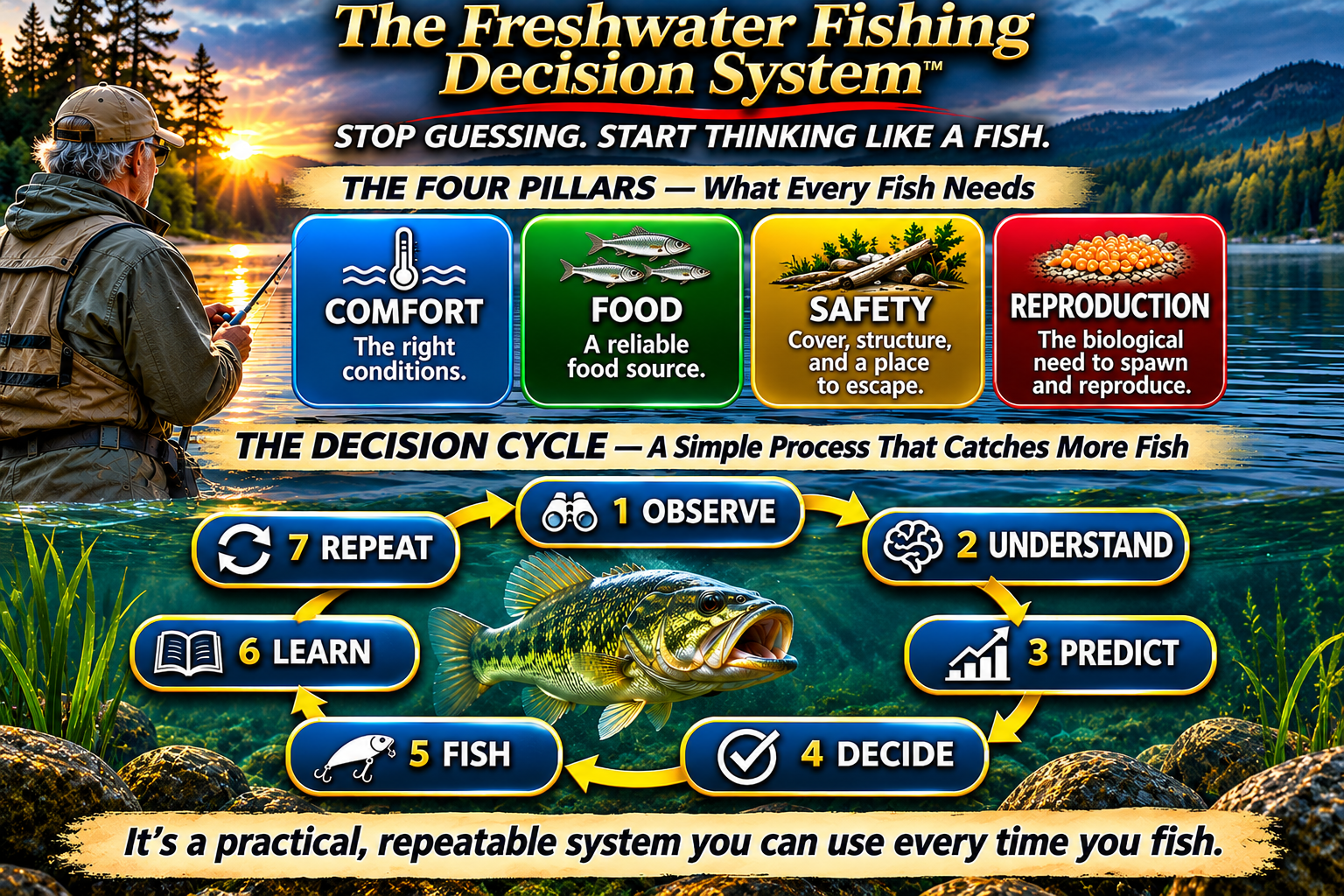
Fish behavior is influenced by four basic needs: Comfort, Food, Safety and Reproduction. Understanding these needs helps you choose fishing locations, decide what to use, and recognize when to adjust your approach. Before changing your bait, ask what the fish need under the condiotions in front of you.

Understanding the Four Basic Needs
The four basic needs of fish are Comfort, Food, Safety and Reproduction. These needs influence fish locations and activity. Use them as a starting point for deciding where to fish and how to approach the conditions you observe.
Comfort: Finding Suitable Water Conditions
Comfort means water conditions that meet a fish's needs. Consider tempeature, disolved oxygen, and current when choosing fishing locations. Suitable conditions vary by species and season, so look for where those needs are met.
Temperature: Consider the water temperatures suitable for your target species.
Oxygen: Cooler water may still be unsuitable if it lacks enough dissolved oxygen.
Current: Look for locations where fish can hold without constantly fighting strong flow.
For example, in a stream, fish may hold behind a rock where the current is slower. That location lets them conserve energy while remaining close to food carried by the flowing water.
Food: Understanding what Fish Eat
Food influences where fish go and when they feed. Look for signs of avilable food, such as insects, small fish, or crayfish. Use what you observe to choose your bait or lure and how to present it.
Observe: Look for insects, small fish, or other signs of food.
Locate: Notice where food gathers or is carried by current.
Present: Choose bait or lure that resembles available food, and consider its depth and movement.
For example, if trout are feeding on insects drifting in a stream, chose a fly or bait that resembles those inscts and let it move naturally with the current.
Safety: Finding Cover and Protection
Fish need protection from predators. Vegetation, submerged wood, rocks and deeper water can provide places to hide or escape. Look for fishing locations where protection is close to suitable warer conditions and food.
Cover: Look for vegetation, submerged wood, or rocks that provide concealment.
Escape: Notice nearby deeper water where fish can retreat.
Approach: Keep your movements quiet and avoid casting your shadow over fish.
Reproduction: Recognizing Spawning Behavior
Spawning can change fish locations, feeding, and activity. The timing and conditions vary by species. Recognizing whether fish are preparing to spawn, spawning, or recovering afterward helps you understand their behavior.
Timing: Learn when your target species typically spawns.
Locations: Identify the habitat that species uses for spawning.
Protection: Avoid disturbing nests or wading through spawning areas.
Before your trip, learn about the spawning season and habitat of your target species. Observe fish activity without disturbing nests or spawning areas.
Now That You Understand
Before choosing your bait, consider what the fish need. Use these four questions to guide your decision:
Comfort: Is the water suitable for your target species?
Food: What are the fish eating, and where is that food?
Safety: Where can the fish find cover or nearby protection?
Reproduction: Is spawning influencing their locations or behavior?
Use your answers to choose a fishing location and presentation. Keep observing, adjust when conditions change, and learn from each trip.
Additional Tips for Freshwater Fishing
To further improve your fishing skills, consider these additional tips:
Stay Informed: Join local fishing clubs or online forums to learn from experienced anglers. Sharing knowledge can help you discover new techniques and locations.
Respect Nature: Always follow local fishing regulations and practice catch-and-release when appropriate. Protecting the environment ensures that future generations can enjoy fishing as well.
Keep a Fishing Journal: Document your fishing trips, including locations, weather conditions, and what you caught. This can help you identify patterns and improve your future fishing trips.
Conclusion
Comfort, Food, Safety and Reproduction help explain fish behavior. Check those needs before changing your bait or lure. Use what you observe to choose fishing locations and presentations, then adjust as conditions change. Every trip is a chance to learn - even when you don't catch fish.


Comments