Understanding Fish Behavior for Better Freshwater Fishing

Updated: Oct 9
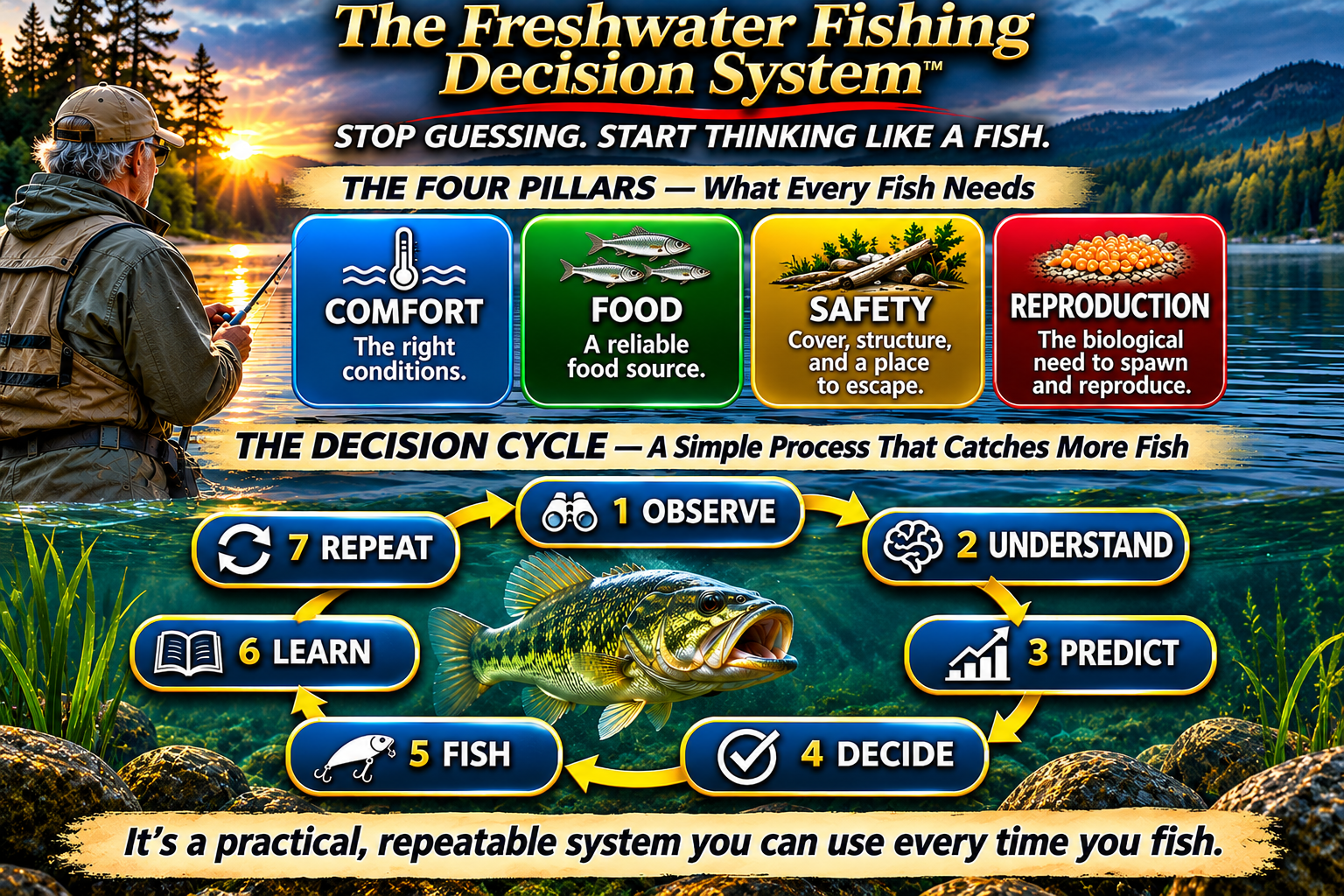
Understanding fish behavior starts with observing the water and considering what fish need. Temperature, oxygen, food, cover, and spawning can influence where fish stay and how they respond. Use these clues to choose your location and presentation, then adjust based on what you observe.

The Basics of Fish Behavior
Fish behavior is influenced by various factors, including environmental conditions, food availability, and their natural instincts. Understanding these elements can help you predict where fish are likely to be and how they will react to different fishing techniques.
Environmental Factors
Water Temperature: A fish's body temperature changes with surrounding water. Different species do best in different temperature ranges. Learn the suitable range for your target species, and consider temperature along with oxygen, food, and cover when choosing where to fish.
Oxygen Levels: Fish need enough oxygen dissolved in the water. Moving water and healthy vegitation can help supply it, but oxygen levels vary by location, depth, and time of day. Plants use oxygen at night, so vegetation does not always mean well - oxygenated water.
Light Conditions: Light can affect where fish hold and when they feed. Try shaded areas or different depths in bright conditions. Dawn and dusk can offer feeding opportunities, but the best times vary by species and local conditions.
Food Availability
Knowing what your target fish eat - and where that food is found - can help you choose where to fish and how to present your bait or lure.
Foraging Patterns: Fish may feed near the bottom, in midwater, or at the surface. Look for where food is avilable, and try presenting your bait or lure at that depth.
Seasonal Changes: The food avilable to fish changes through the year. Look for what your target fish are eating in that water, and choose baits or lures that resemble it.
Social Behavior of Fish
Some fish gather in groups, while others spend more time alone. Knowing how your target species behaves can help you decide where to look for it.
Schooling
Baitfish often swim together in schools. Larger fish may follow them to feed, but finding bait fish does not guarentee larger fish are there. Watch for signs that fish are chasing or feeding on bait fish.
Territoriality
Some fish defend territories or nests, especially during spawning. A defensive strike does not necessarily mean the fish is feeding. Avoid disturbing nests or spawning areas.
Seasonal Behavior Patterns
Fish behavior varies significantly with the seasons. Understanding these patterns can help you plan your fishing trips more effectively.
Spring
Warming water can change fish activity and locations. Many freshwater species spawn in spring, but timing and habitat vary. Learn your target species' spawning habits and avoid disturbing nest or spawning areas.
Summer
During summer, look for water with suitable tempewratures and enough dissolved oxygen. Deeper water is not always suitable. Fish locations and feeding times vary with species, available food, light, and local conditions.
Fall
Cooling water can change fish locations and feeding activity. Look for avilable food and suitable water conditions. Fall patterns vary by species and lake or river, so use what you observe to guide your approach.
Winter
Cold water can slow fish activity, but fish still feed. Their locations vary by species, avilable food, oxygen, and local conditions. Try different depths and adjust your presentation to their response.
Techniques to Improve Your Fishing Success
Understanding fish behavior is only part of the equation. Here are some techniques to enhance your fishing success based on this knowledge.
Choosing the Right Bait
Selecting the appropriate bait is crucial. Match your bait to the fish species and their current feeding habits. For example:
Live Bait: Choose bait suited to your target species and the food avilable. Check local rules before using or transporting live bait.
Lures: Use lures that mimic the movement and color of the fish’s natural prey. Experiment with different types until you find what works best.
Fishing Techniques
Casting: Learn to cast accurately to reach specific areas where fish are likely to be hiding, such as near structures or vegetation.
Trolling: This technique involves pulling baited lines behind a moving boat. It can cover a large area and is effective for targeting fish that are spread out.
Drifting: Allow your bait to drift naturally with the current. This can be particularly effective for species like trout.
Observing Fish Behavior
Watch for surface reises, bait fish movement, and other signs of fish activity. A jumping fish or ripple does not always mean feeding. Use these clues to decide where to fish and how to present your bait or lure.
Conclusion
Use underwater conditions, available food, cover, and seaonal changes to guide your fishing decisions. Observce what is happening, adjust your location or presentation when needed, and learn from each trip - even when you don't catch fish.


Comments